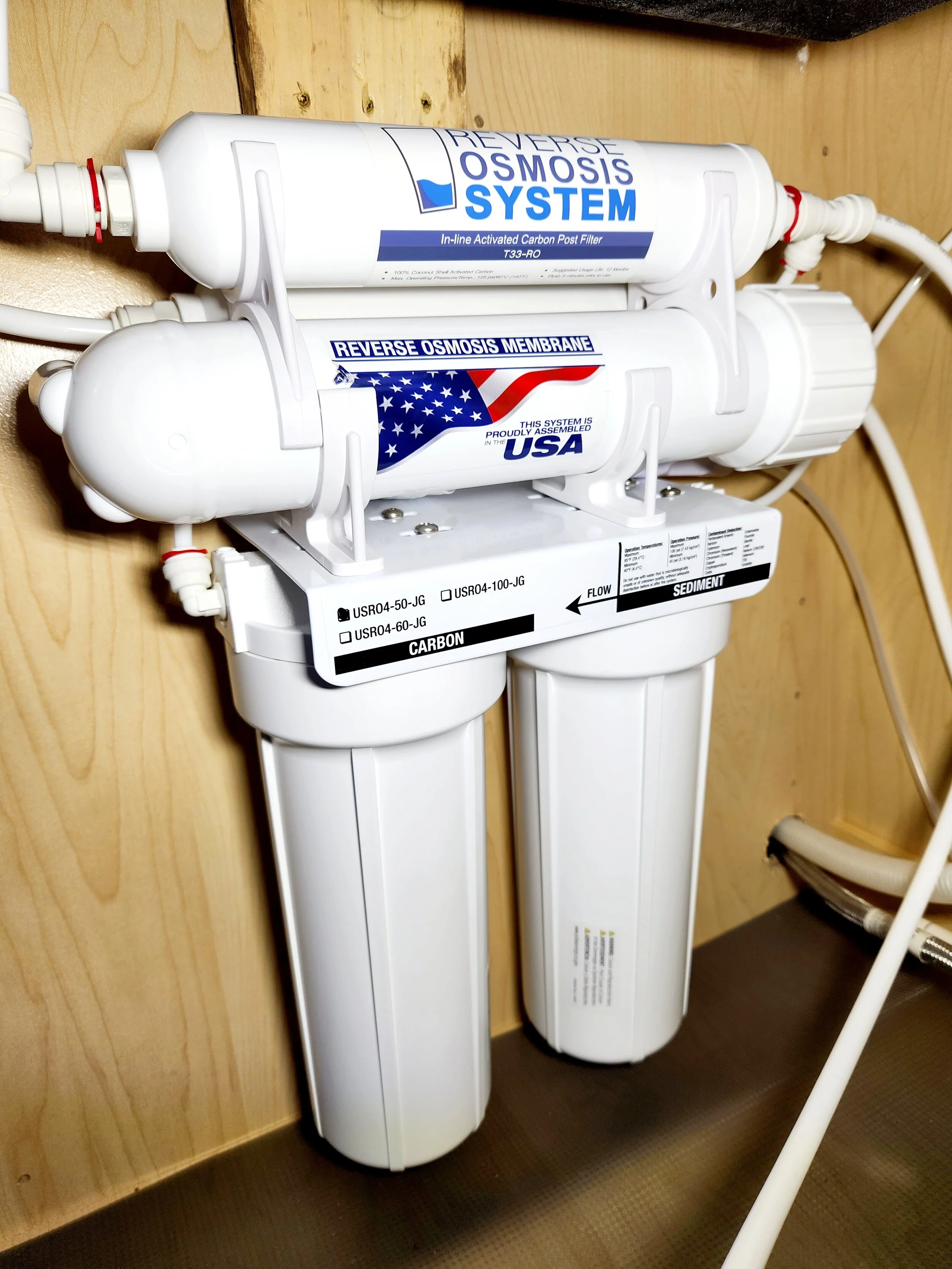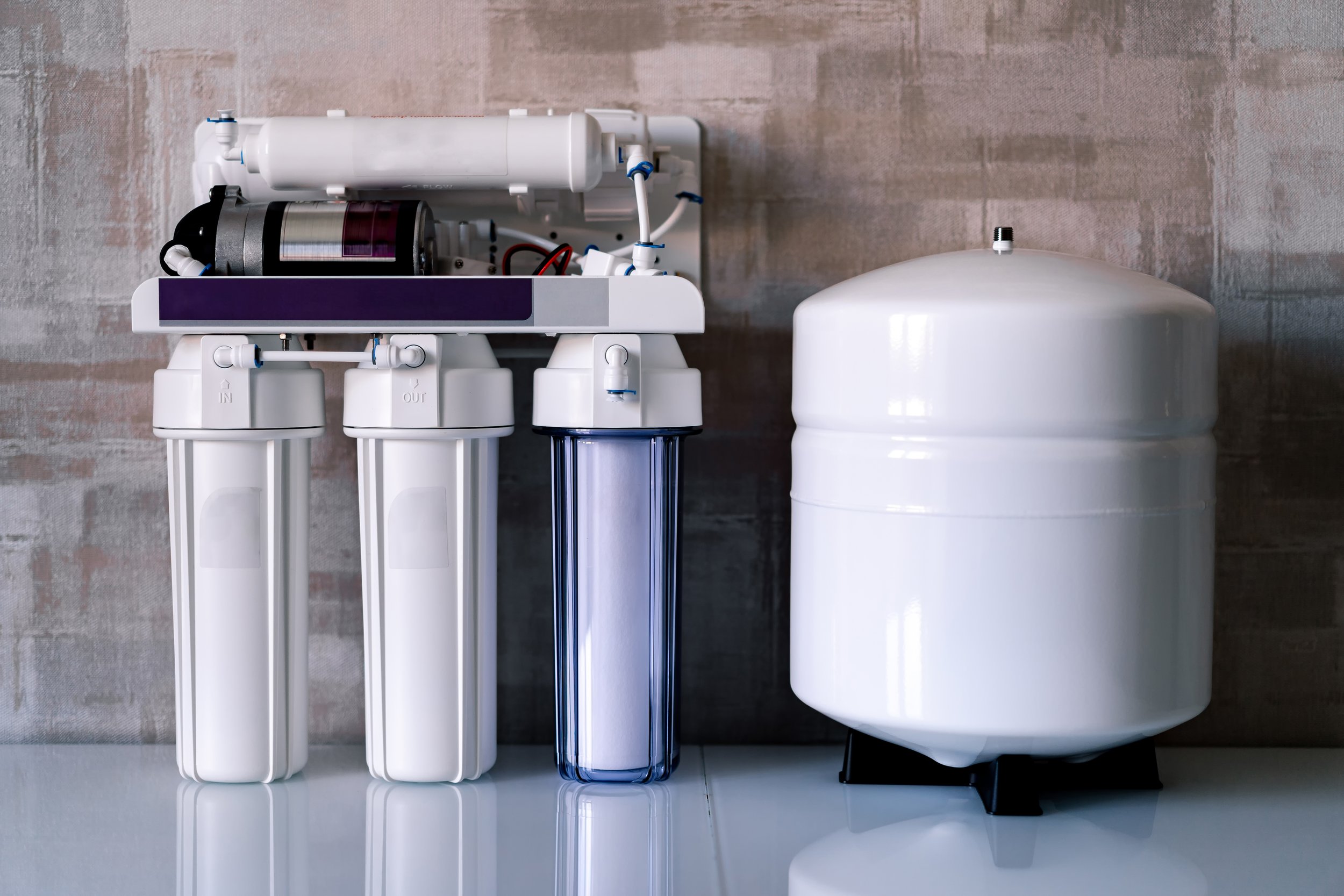
Reverse Osmosis
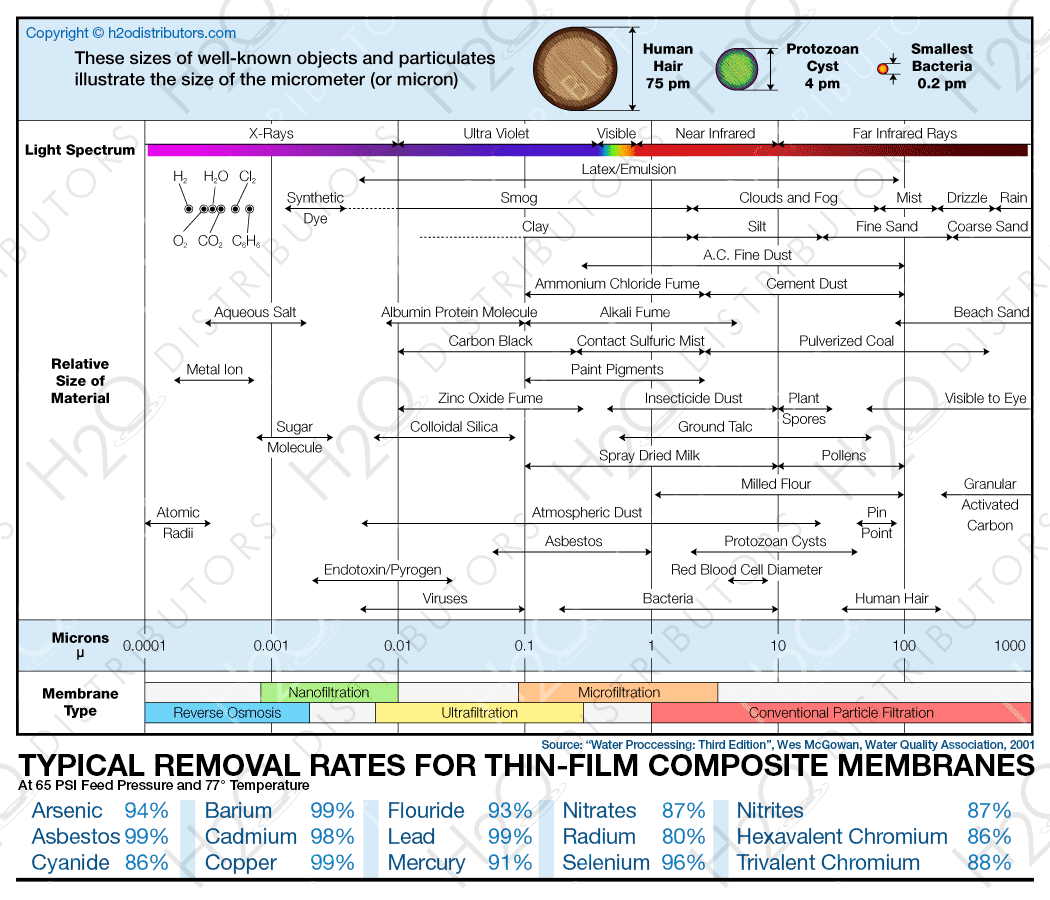
Reverse Osmosis removes 95% of total dissolved solids down to 0.0001 micron! That means even the smallest virus cannot pass the membrane (see the chart below). Under-sink RO systems consist of multiple “stages” that the water passes through. The finished product is very nearly pure H2O.
What Does an Installation Involve?
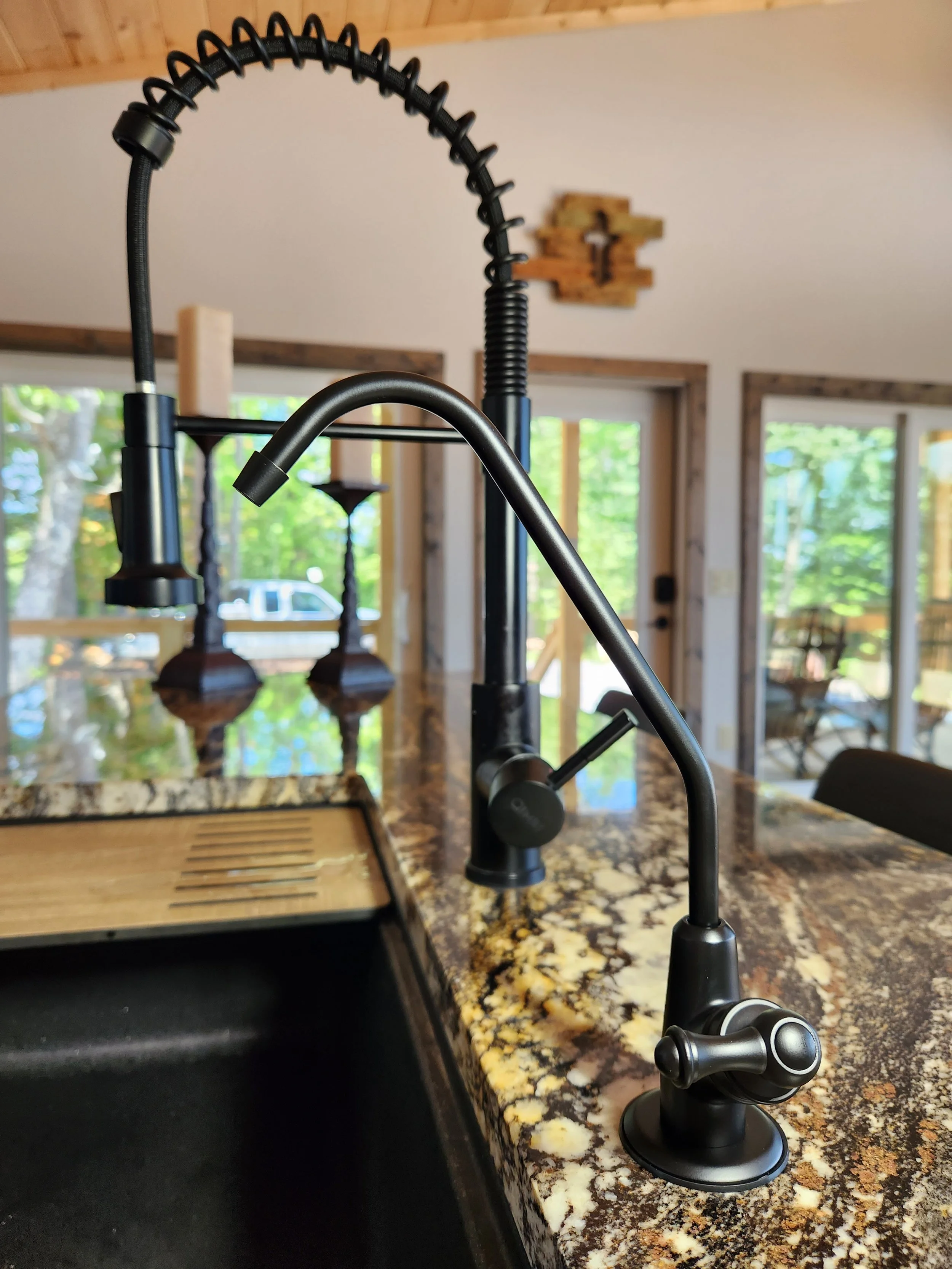
Point of Use (POU) Reverse Osmosis systems are usually installed under the kitchen sink, but basement and crawlspace installs are not uncommon. The filtered water is connected to a designated faucet, refrigerator, or both. Should you choose to have an RO faucet, we will install it on the countertop. Many faucet styles and finishes are available.
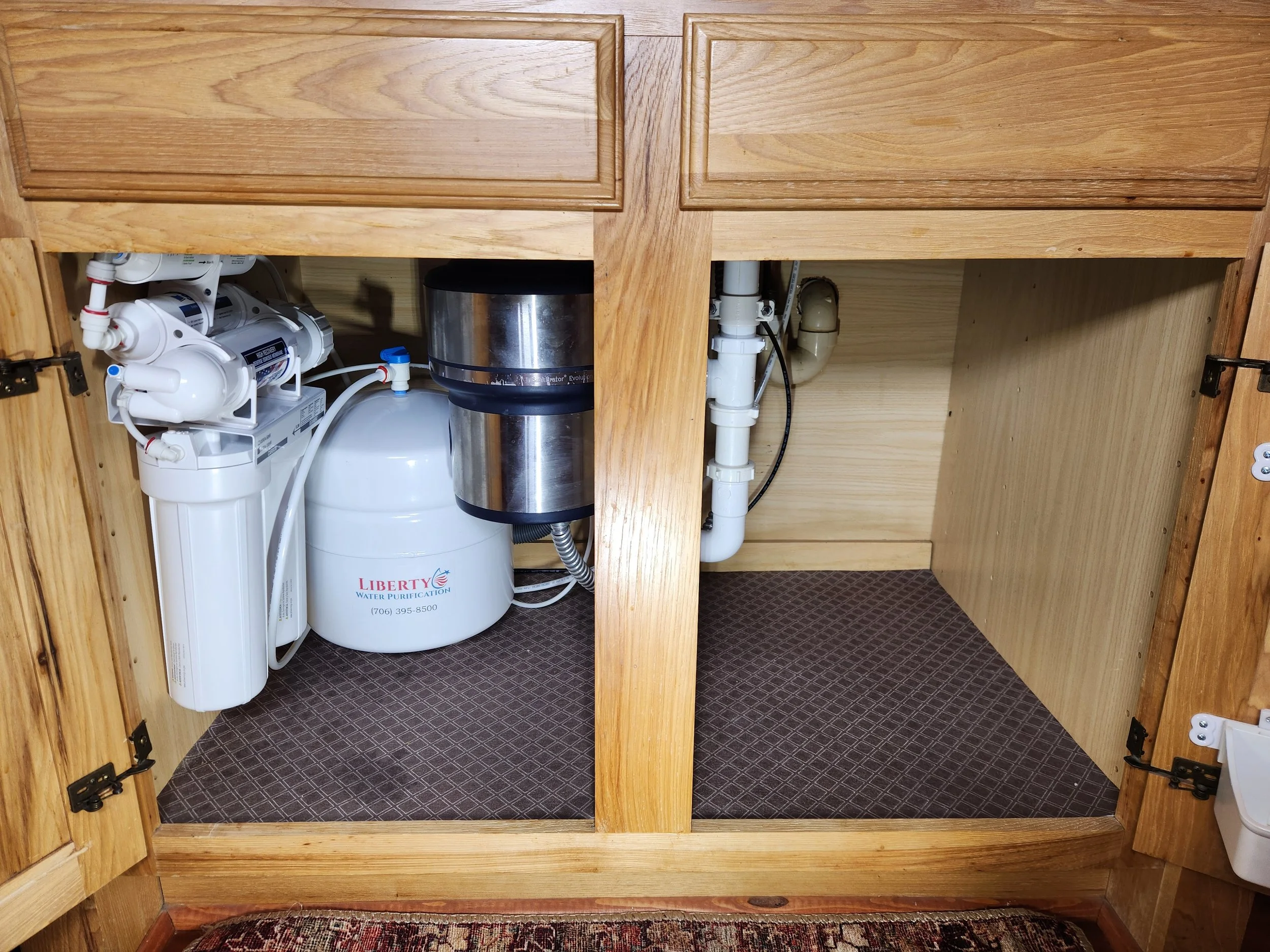
Will I Lose Space Under My Sink?
The RO consists of filters, tubing, and a storage tank. The filters are attached to a bracket, which gets mounted so it’s not resting on the cabinet floor. The tubes are methodically routed so they are out of the way and don’t interfere with retractable sink sprayers. Storage tanks come in different sizes, and we do our best to tuck them out of the way.
Does RO water remove minerals that are essential for my health?
Our systems include a remineralization filter to replace minerals removed by the RO membrane. Additionally this filter increases pH & alkalinity, creating a pleasant “sweeter” tasting water. As water treatment professionals, we can’t give health advice. However if you want one doctor's opinion, we encourage you to watch this video by Dr Ken Barry.
Why Do RO Systems Need Storage Tanks?
RO systems make water slowly. Our under-sink models produce 100 gallons per day. Therefore a finished water storage tank is required to supply water on demand.
Call, Text, or eMail for any additional questions you have about Reverse Osmosis systems.
More Questions?