
Ultraviolet Light Sterilization
Why Choose UV?
When we disinfect residential water, typically we choose a chemical method or a physical method. Chlorine is a proven way to disinfect water, but with disadvantages and limitations. Here are some reasons why UV is favorable over chlorine for residential water treatment:
Disadvantages of Chlorine (chemical disinfection):
Storage & handling of noxious chemicals
Ongoing monitoring and maintenance
Large storage tanks for contact time (so chemical reactions can occur)
Potential for disinfection byproducts (DPBs like trihalomethanes are cancer-causing)
Chlorine-resistant pathogens do exist!
Advantages of UV (physical disinfection):
24/7 Disinfection that does not alter pH, taste, odor, color
Fast-acting (reacts almost instantly)
No dangerous disinfection byproducts (DPBs)
Environmentally friendly
On municipal water, UV systems can help you get through a “Boil Water Advisory”
What Equipment Do You Install?
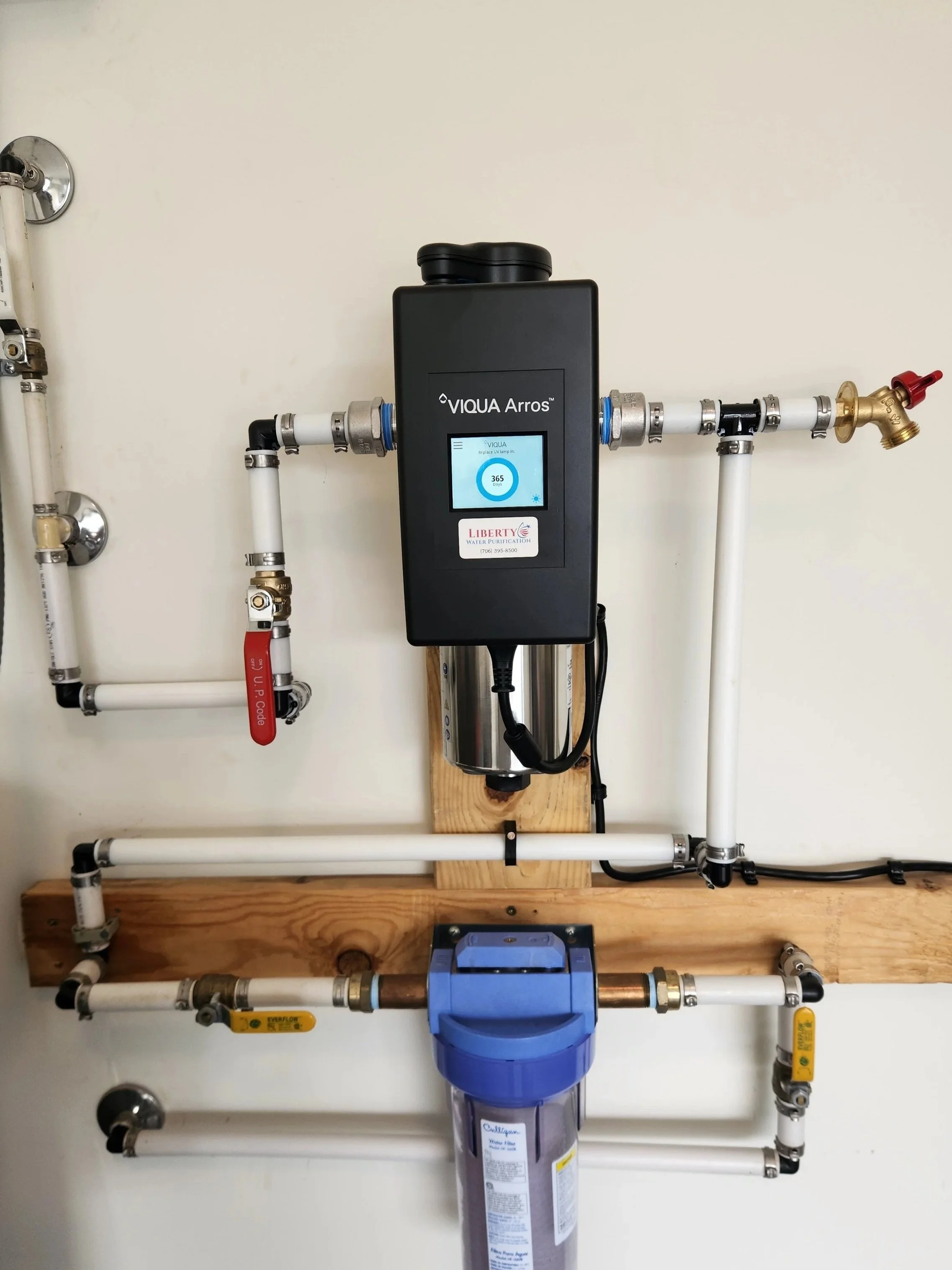
VIQUA UV systems are made in Ontario, Canada and trusted worldwide. The image below shows our most popular residential unit, which comes in different sizes based on peak flow demands.
We are an authorized VIQUA installer. Contact us directly to inquire about other VIQUA systems.
A Brief Science Lesson: Lamp Output & UV Dose
Lamp Output
UV lamps are special because they emit light in the spectrum considered “germicidal UV”. This light penetrates the cell walls of microorganisms, altering their DNA structure so they cannot reproduce or cause infection. Low pressure UVC lamps have an output of 254nm. This is the “sweet spot,” since peak absorption for DNA molecules is 245nm - 270nm.
Dose
Several factors affect the dose. The UV light needs to be transmitted efficiently into the water in the chamber. If the quartz is fouled or solarized, the UVT becomes compromised. This is why we clean the quartz during maintenance. Our customers who purchase an ARROS model will receive a new quartz every time we replace the lamp.
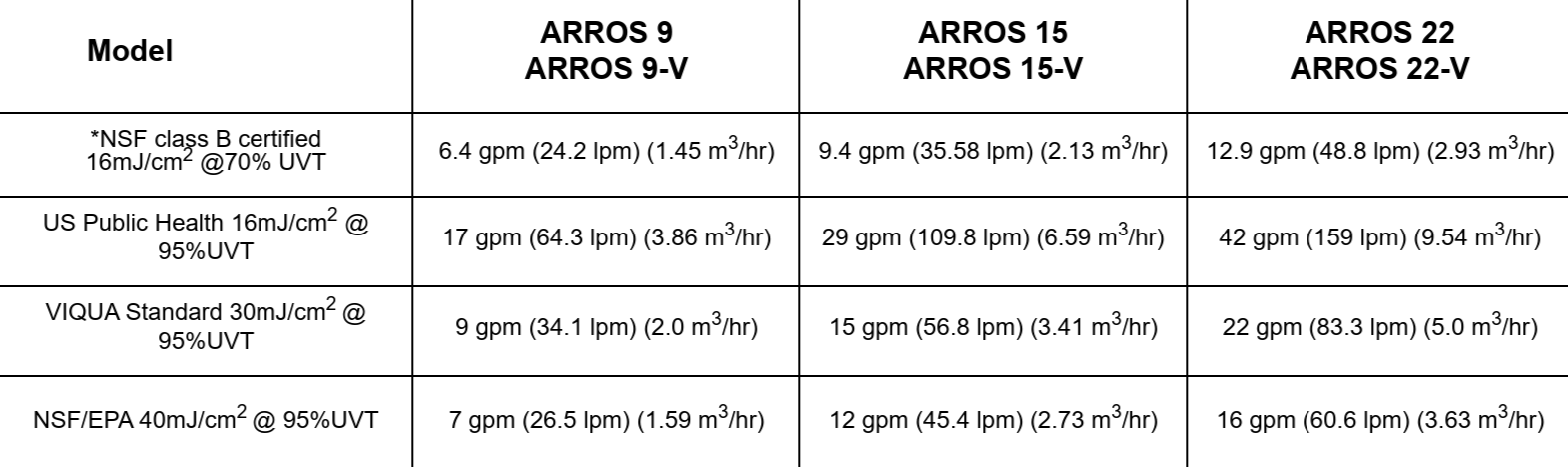
Another factor is the flow rate through the chamber. The smallest ARROS unit will maintain the industry standard 30 mJ/cm2 to easily inactivate microorganisms up to 9 gallons per minute (when the UVT is 95%). At 7 GPM, the dose can be closer to 40 mJ/cm2. To give you some perspective on what this actually means, consider that UV will disinfect E.coli at a 4-Log removal rate (99.99%) at a dose of 5.6 mJ/cm2.
What About Maintenance?
The lamp life is 9000 hours (1 year). The quartz sleeve should be cleaned based on how effectively UV light is being transmitted. We will only use Viqua OEM replacement parts.
Be Proactive!
There are 1.29 million cases of gastrointestinal water-borne illness from private wells each year in the United States!